80 SUZUKI DR400 12711-32411 Camshaft Cam Shaft
fits make: Suzuki. year: 1980.
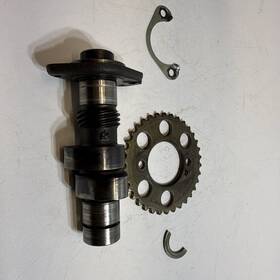
( Brand: 80 Suzuki Dr400 ), ( Manufacturer Part Number: 12711-32411 ), ( Part Type: Camshaft Cam Shaft ), ( Material: Steel ), ( Country Of Origin: Japan )
Review 80 SUZUKI DR400 Camshaft Cam Shaft fits 1980
The **1980 Suzuki DR400 12711-32411 Camshaft** is a meticulously crafted, high-performance component designed to elevate the engine s efficiency and power output in one of the most iconic off-road motorcycles of its era. This forged steel camshaft, bearing the original **12711-32411** part number, is a critical element of the DR400 s air-cooled, single-cylinder, two-stroke engine, renowned for its durability and adaptability in rugged terrain. Engineered with precision, the camshaft features a carefully profiled lobe design optimized for the DR400 s 396cc displacement, balancing smooth throttle response with robust low-end torque essential for navigating steep climbs, rocky trails, and demanding off-road conditions. The camshaft s hardened steel construction ensures resistance to wear and deformation, even under prolonged high-stress operation, making it a reliable upgrade for both stock and modified engines. Whether used in a restored classic or a performance-tuned DR400, this camshaft delivers enhanced breathing efficiency through optimized valve timing, allowing for better air-fuel mixture intake and exhaust flow. Its compatibility with the original 1980 model s cylinder head and valve train ensures seamless integration, while its robust design also accommodates minor modifications, such as porting or carburetor upgrades, to further refine the engine s character. For enthusiasts seeking to preserve the soul of the DR400 while unlocking its full potential, this camshaft is an indispensable part combining authenticity with performance to keep the spirit of Suzuki s legendary dual-sport motorcycle alive.
### Pros and Cons of Buying a 1980 Suzuki DR400 Camshaft (Part Number: 12711-32411)
#### **Pros:**1. **Cost-Effective Replacement** The camshaft is a relatively inexpensive part compared to labor costs, making it a budget-friendly upgrade for restoring or maintaining a DR400. Prices for used or aftermarket units are significantly lower than buying a complete engine.
2. **Performance Potential** A high-quality aftermarket camshaft (such as those from **Suzuki Performance, K&N, or OEM replacements**) can improve throttle response, especially if the original cam is worn or stock. Some aftermarket options offer a more aggressive profile for better mid-range power.
3. **Ease of Installation** The DR400 s engine design is relatively straightforward, and replacing the camshaft is a manageable DIY job for someone with basic mechanical skills. Tools required are minimal (socket set, torque wrench, and possibly a camshaft installer).
4. **Compatibility with Stock Engine** The 1980 DR400 s engine is a simple air-cooled single-cylinder, meaning modifications like a camshaft swap won t require extensive additional work (unlike multi-cylinder engines).
5. **Potential for Increased Longevity** If the original camshaft is worn or pitted, replacing it can prevent excessive valve train wear, reducing the risk of catastrophic engine failure.
6. **Aftermarket Support** There is a strong aftermarket community for the DR400, with readily available parts, tutorials, and forums (such as **Suzuki Owners Club, ATV.com, or YouTube**) to guide installation.
7. **Minimal Engine Modifications Needed** Unlike more aggressive engine builds, simply swapping the camshaft may not require changes to ignition timing, carburetion, or exhaust, making it a low-commitment upgrade.
---
#### **Cons:**1. **Limited Performance Gains** The DR400 is already a simple, low-compression engine. A camshaft swap alone won t drastically increase power expect modest improvements in throttle response rather than significant horsepower gains. For meaningful power increases, other modifications (carburetion, compression ratio, exhaust) would be necessary.
2. **Potential for Overcomplicating a Simple Bike** The DR400 is a basic, no-frills ATV. Pushing it with aggressive camshafts or other mods may lead to reliability issues, especially if the rest of the engine (pistons, rings, bearings) is worn.
3. **Risk of Voiding Warranty (If Applicable)** If the bike is still under warranty (unlikely for a 1980 model), aftermarket camshafts may void it. However, since this is a used bike, warranty concerns are negligible.
4. **Timing Chain Wear Concerns** The DR400 uses a timing chain, which can stretch or wear over time. If the chain is already stretched, a new camshaft may not help it could even cause timing issues if not paired with a new chain or sprockets.
5. **Carburetion Mismatch** A more aggressive camshaft may require adjustments to the carburetor (such as a larger jet or idle mixture changes) to prevent stalling or rough running. Ignoring this can lead to poor performance or drivability issues.
6. **Potential for Overheating** The DR400 s cooling system is minimal. If the camshaft increases compression or valve lift significantly, the engine may run hotter, especially in stop-and-go conditions. This could shorten the life of the engine if not managed.
7. **Quality Variability in Aftermarket Parts** Not all aftermarket camshafts are created equal. Some cheaper options may have poor machining, leading to premature wear or failure. Researching reputable brands (e.g., **Suzuki Performance, K&N, or OEM replacements**) is crucial.
8. **Labor Intensity for Beginners** While the job is manageable, removing and reinstalling the camshaft requires disassembling the valve train, checking valve clearances, and ensuring proper lubrication. Mistakes (such as improper torque or misalignment) can lead to engine damage.
---
### **Conclusion:**Buying and installing a **1980 Suzuki DR400 camshaft (12711-32411)** can be a worthwhile upgrade if your goal is to **restore drivability, improve throttle response, or refresh a worn engine** without a major overhaul. The cost is low, the installation is manageable, and the aftermarket supports it well.
However, **expect only modest performance gains** this is not a high-power modification. If your DR400 is already running well, the upgrade may not be worth the effort. For meaningful power increases, consider pairing the camshaft with **carburetion tuning, a better exhaust, or a compression kit**.
If you re **not comfortable with basic engine work**, this project may be too involved. If you re **looking for a simple, cost-effective way to revive a tired DR400**, it s a solid choice just ensure you research the camshaft profile and pair it with proper carburetion adjustments.
---
### **Recommendation:**- **If your DR400 is running poorly or has a worn camshaft**, replacing it with an **OEM or high-quality aftermarket unit** (e.g., **Suzuki Performance or K&N**) is a smart investment.
- **If your bike is already running well**, skip the camshaft swap unless you re targeting a specific performance goal (e.g., better low-end torque).
- **Pair the upgrade with:**- A **timing chain inspection/replacement** if it s stretched.
- **Carburetor adjustments** (consult a tuning guide or professional).
- **Proper lubrication** during installation to prevent wear.
- **Avoid cheap, unknown aftermarket cams** stick with reputable brands to ensure longevity.
- **Consider a full engine rebuild** if the bike has significant wear beyond just the camshaft.
**Final Verdict:** *A camshaft swap is a low-risk, low-cost way to improve a DR400 s performance, but don t expect dramatic results unless you modify other components.* If you re a beginner, proceed with caution and thorough research.
Details:
Please reference photos for fitment and condition. Camshaft and sprocket removed from a 1980 DR400. Items as shown. Cam shows signs of wear but may be usable as is.
Sprocket looks to be in good shape. No bolts are included for the camshaft sprocket.
part #: 1271132411 prices
- $29.75-$275.00
specifications transmissioncycleoi:
- for makes: Suzuki
- for years: 1980
- brand: 80 Suzuki Dr400
- mpn: 12711-32411
- part type: Camshaft Cam Shaft
- material: Steel
- country of origin: Japan
payments transmissioncycleoi:
- wallet: Google-pay
- credit card: Discover
- other
shipping transmissioncycleoi:
- service: USPS Priority Mail Medium Flat Rate Box
- cost: $0.00
- type: Fixed
- transit: 4-9 Days
- class: Expedited
- carrier: USPS
returns transmissioncycleoi:
- policy: No Returns
offer transmissioncycleoi:
- availability: In Stock
- options: Ship-to-home
- sold: 0
- quantity: 1
- best offers: True
- started: February 8, 2026
seller transmissioncycleoi:
- rating: 100.0%
- city: Brooklyn, Michigan
- # reviews: 709
general transmissioncycleoi:
- Motorcycle Scooter Parts Accessories > Transmission Drivetrain > Other Transmission Drivetrain Parts
- condition: For parts or not working
80 Suzuki Dr400 12711-32411 Is Similar To:
- 09444-20003 Suzuki Gsxr Gear Shift Shaft Spring (38.8% similar) ...(November 1st, 2018)
- 12760-24b10 Suzuki Chain Cam Shaft New Oem 718721422963 (41.5% similar) The picture could be generic. New oem Suzuki chain cam shaft oem part number: 12760-24B10ITEM only fits specific model's listed...(March 17th, 2018)
- 12760-45040 Suzuki Chain Camshaft New Oem 718721423205 (40% similar) New oem Suzuki chain camshaft oem part number: qty 1 previous: 12760-49011ITEM only fits specific model's listed. The picture could be generic. New oem Suzuki chain camshaft oem part number: qty 1 previous: 12760-49011ITEM only fits specific model's listed...(October 19th, 2018)
- 22511-45102 Oem Suzuki Nos Transmission Countershaft Input Cam Dog Hub Coupler (34.1% similar) Nos oem 1979 Suzuki GS850 transmission counter shaft input cam dog hub couplet...(July 15th, 2018)
- 240-520-12m Sunline Tooth Front Countershaft Sprocket Suzuki Counter Shaft (27.2% similar) We've been on since 2000 and riding, driving, racing long before then. Unique, marketing, and strategy consulting from as was...(November 11th, 2018)
- Rmz 2011-2012 24120-10h01 Counter 250 Rm Rmz250 Suzuki Countershaft Shaft Transmission (30.4% similar) I will try my hardest to respond quickly and appropriately to your problems. This part fits the following Suzuki RMZ250 may fit other years and model's, please do your research before purchasing. Here is a transmission counter shaft off a 2011 Suzuki RMZ250 I am parting out many other motorcycles...(January 13th, 2015)
- 24120-28h11 24131-28h10 Suzuki Complete Transmission Main Counter Shaft Set (33.3% similar) GSR veers 823 gs combined shipping:i do combine shipping. I will try my hardest to respond quickly and appropriately your problems...(July 15th, 2018)
- 24120-28h21 24131-28h20 Suzuki New Oem Complete Transmission Main Counter Shaft (35.4% similar) GSR veers 823 gs combined shipping:i do combine shipping...(June 9th, 2018)
- 24121-10g00 24151-10g00 24381-10g00 09283-35015 Suzuki Burgman Idler Counter Shaft Gears (28.8% similar) Comes as pictured. Please through messages. Teeth only have light wear. Satisfaction guaranteed. Brand: Suzuki condition: used notes: gears are in good condition. Items are shipped using USPS, ups, and FedEx. Bribery's removed from a 2003 Suzuki Bergman 650, AN650K3...(September 28th, 2018)
- 24121-40c03 Not Specified Suzuki Transmission Main Shaft Axle Gears Spindle (30.2% similar) Cycle heap Suzuki GSXR1100 transmission main shaft axle gears spindle 40C03 this is in very good condition and shows normal signs of wear. Please review all pictures to assess the condition of item. Moulting points and gears in good shape...(October 31st, 2018)
- Oem Gsxr1000 Drive Shaft 24131-40f00 Suzuki 01-08 Gsx-r1000 Transmission (26% similar) ...(January 13th, 2015)